A change of mind
The Gospels use the Greek metanoia: meta (after, beyond, changed) plus nous (mind). It means a new way of seeing. Plenty of mystics hear it even more literally, as going beyond the mind itself.
Behind the Greek is the Hebrew idea Jesus grew up with, teshuvah, "return." It doesn't mean you're worthless. It means you wandered, and the way back is open.
Feel terrible, confess, and hope you're forgiven.
See differently. Turn toward the light. You're already welcome.
When "change your mind" became "do penance"
When the Bible was translated into Latin, metanoia often became paenitentia, and "repent" slid toward "do penance," a church procedure with priests, rituals, and fees. Scholars noticed. Erasmus pointed out that the Greek meant a change of heart, not a sacrament, and in 1517 Martin Luther opened his 95 Theses on exactly this word. It's a good example of how a translation choice can turn an invitation into a system.
It also lines up with the other big mistranslation. Sin in Greek is hamartia, an archer's word for missing the mark. You aimed, you missed, you aim again.
The father runs
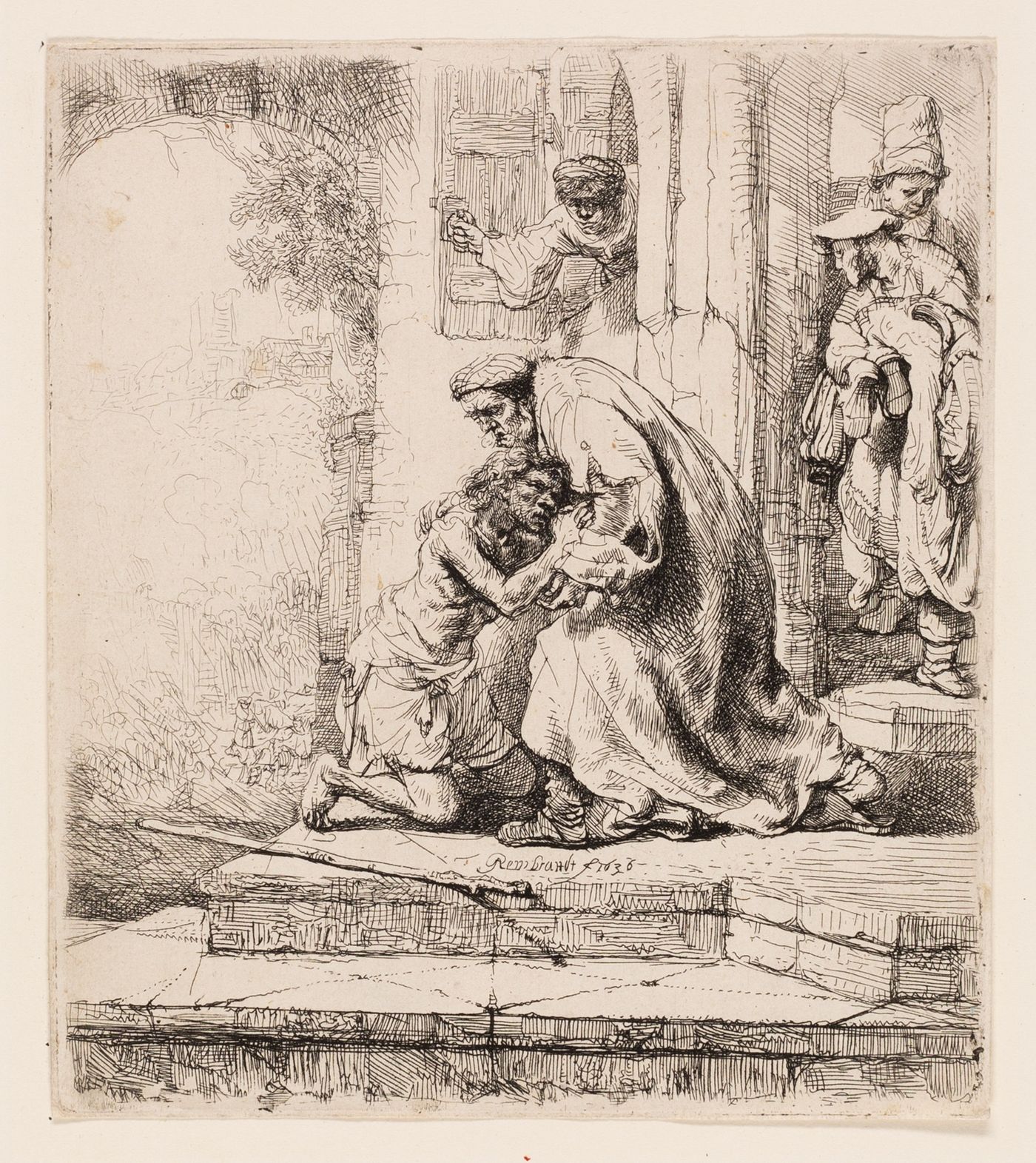
If you only kept one story from the whole Bible, keep the prodigal son (Luke 15). A son takes his inheritance, blows it, and ends up feeding pigs. He "came to himself," turns around, and heads home rehearsing an apology.
"But while he was still far off, his father saw him and was filled with compassion; he ran and put his arms around him and kissed him."
Luke 15:20The father doesn't wait for the speech. He runs. That's repentance: the turning, and then the discovery that love was waiting the whole time.
PRAY. REPENT. OBEY.
I was driving with my family, practicing a new mantra, "I am at peace with the way things are," and feeling great. Then I passed a church billboard in all caps: PRAY. REPENT. OBEY. My first reaction was the usual cringe.
But from that peaceful place, I read it again. Pray: sit in stillness. Repent: look honestly at the past and let it go. Obey: you're not running the universe, so surrender. Meditate, let go of the past, and surrender. That's Ram Dass 101.
The words were never the problem. Fear got hold of them.