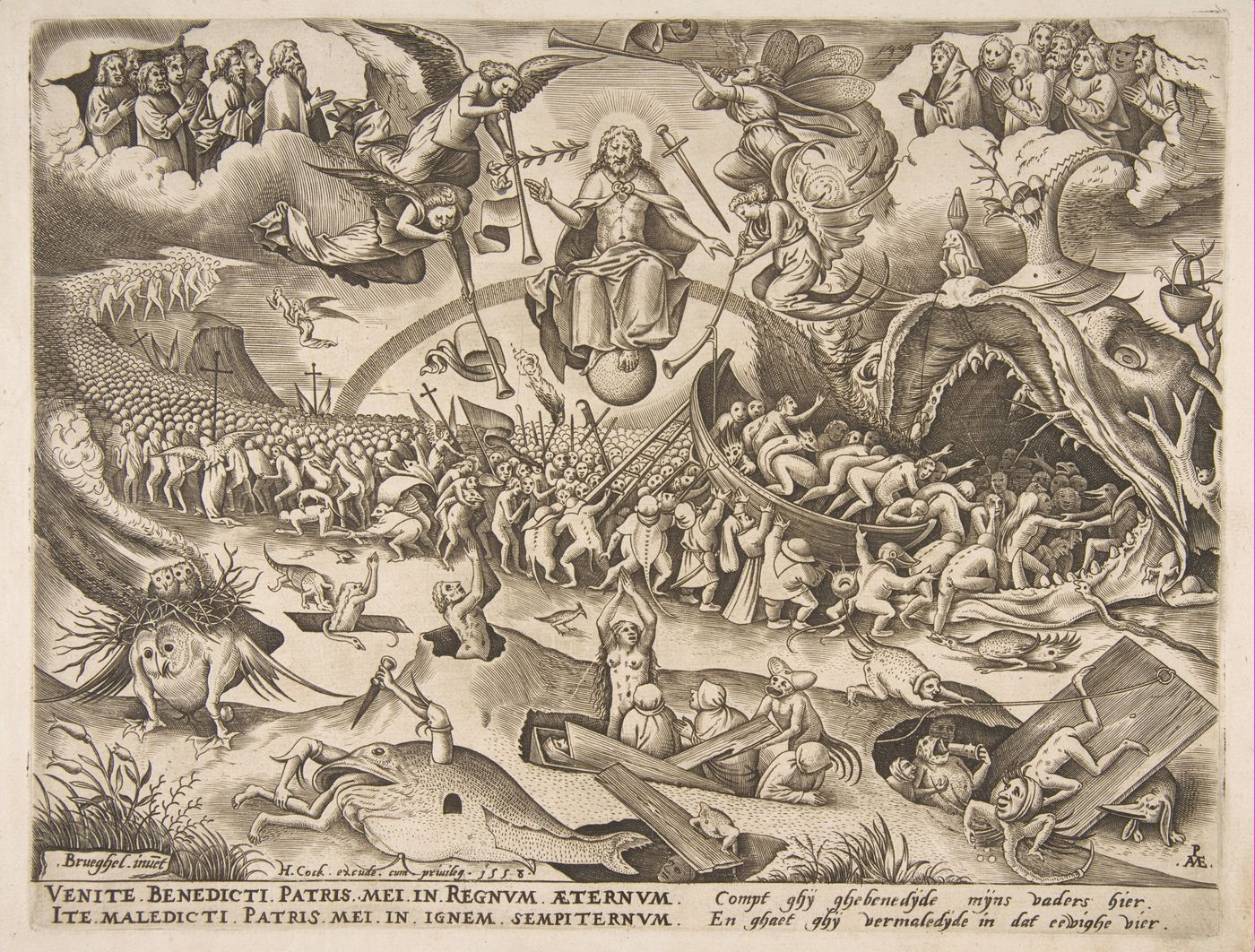
What the Bible actually says
-
Sheol: the grave.
The Hebrew Bible's word for where everyone goes when they die, good and bad alike. It has no fire and no punishment. When the prophet Samuel gets summoned back from Sheol, he's not tormented, just annoyed: "Why have you disturbed me by bringing me up?" (1 Samuel 28:15).
-
Hades: the Greek underworld.
Borrowed from Greek mythology, the world of Orpheus and Plato's underworld myths. It appears about ten times in the New Testament, and only four come from Jesus' mouth. Several more are in Revelation, whose lake of fire looks a lot like Plato's imagery in the Phaedo.
-
Gehenna: a real valley.
Most of the time Jesus says "hell," the word is Gehenna, the Valley of Hinnom just outside Jerusalem. It had a dark history (Jeremiah condemns child sacrifice there), and later writers remembered it as a place where fires burned. Jesus' listeners knew that valley. Calling something Gehenna was like saying "that way of living is garbage." It's a symbol, like so much of his teaching, not a map of the afterlife.
Most of the fire is in Matthew
The phrase "weeping and gnashing of teeth" shows up six times in Matthew and once in Luke. Mark never uses it, and John barely touches punishment at all. Matthew was written in the decades after Rome destroyed the Temple in 70 CE, while Jesus' Jewish followers were competing with other Jewish groups for the future of the faith. That's a lot of us-versus-them energy.
You can watch it happen in one story. The parable of the Great Banquet appears in Luke, Matthew, and the Gospel of Thomas. In Luke and Thomas, a host invites people, they make excuses, and he fills the hall with whoever's out on the street. Only Matthew's version adds a guest who gets thrown "into the outer darkness, where there will be weeping and gnashing of teeth" (Matthew 22:13).
Hell is a state of mind
There's an old Zen story. A samurai demands that a monk teach him about heaven and hell. The monk insults him until the samurai draws his sword in a rage, and the monk says quietly, "That's hell." The samurai sees it, lowers the sword, and bows in gratitude. "And that," says the monk, "is heaven."
Even a pope agreed. In 1999 John Paul II described hell not as "a punishment imposed externally by God" but as the result of choices people make in this life.
If you want to go to hell, the real one, here's the recipe:
- Have impossibly high expectations of everyone and everything.
- Make your love conditional and your relationships transactional.
- Never forgive anyone who wrongs you.
- Never forgive yourself.
The kingdom of heaven is within you (Luke 17:21). Turns out the other place is too. Good news, though: you can walk out any time.